


If you’ve heard friends talking about Rad Power and you’re wondering whether to trust them with your first electric bike, you’re not alone. Rad is one of the biggest names in the North American ebike space, with hundreds of thousands of bikes on the road and a focus on practical, everyday riding.
Short answer: Rad Power is a solid, mid-priced electric bicycle brand for riders who want car-replacement utility and strong support, not boutique race performance. But how good they are for you depends on what and where you ride, and how they stack up against alternatives.
This review walks through Rad’s current best-selling models, real-world riding feel, long-term ownership, and how they compare to moped-style options like Qiolor’s Tiger RE and Tiger Plus.
Who Rad Power Bikes Are Really For
Rad Power started in Seattle back in 2007 and grew into one of the largest e-bike brands in North America by selling direct to consumers and focusing on practical, do-everything bikes rather than super-light
If any of these sound like you, you’re squarely in Rad’s target zone:
- You want an electric bike that can replace a lot of short car trips.
- You care more about comfort, range, and hauling kids or groceries than shaving every pound off the bicycle.
- You like the idea of a big brand with a 2-year warranty, UL-certified batteries, and a growing service network of more than 1,400 partner shops.
- You’re okay with a rear-hub motor instead of a high-end mid-drive system.
Most Rad models feel like sturdy, upright city bikes or cargo bikes that happen to have a motor. You still pedal, but the motor takes the sting out of hills and headwinds. For many riders, that’s exactly what they want from an ebike (or e-bike, or even “e bike” as people often type it).
Rad’s lineup covers:
- All-terrain / trail riding (Radster Trail)
- Cargo and family hauling (RadWagon 5)
- Folding, compact use (RadExpand 5 Plus)
Let’s look at those three, since they’re among Rad’s most visible and popular models right now.
Radster Trail, RadWagon 5, and RadExpand 5 Plus: Rad’s Best-Selling E-Bikes
Rad’s current “best seller” list highlights the Radster Trail, RadWagon 5, and RadExpand 5 Plus, all built around a 750W rear-hub motor, Safe Shield battery tech, and a focus on everyday reliability.
Quick Comparison Table
Specs are claimed or typical values from Rad and major retailers. Real-world numbers depend on rider weight, terrain, and assist level.
| Model | Type | Motor & Torque | Max Speed | Claimed Range | Payload Capacity | What It’s Best At |
| Radster Trail | All-terrain / trail e bike | 750W rear hub, ~100 Nm | up to 28 mph (Class 3) | up to ~65+ mi | 370 lb | Fast hill-climbing, mixed pavement and dirt |
| RadWagon 5 | Longtail cargo electric bicycle | 750W rear hub, 90 Nm | up to 28 mph (Class 3 options) | up to ~60 mi | 375 lb total / 120 lb rear rack | School runs, groceries, true car-replacement use |
| RadExpand 5 Plus | Folding fat-tire ebike | 750W rear hub | 20 mph (Class 2) | up to ~60+ mi | 315 lb | Apartment living, RV travel, shorter riders |
Specs are claimed or typical values from Rad and major retailers. Real-world numbers depend on rider weight, terrain, and assist level.
Max speed assumes Class 3 unlocked where allowed.
Range on low to medium assist, mixed riding.
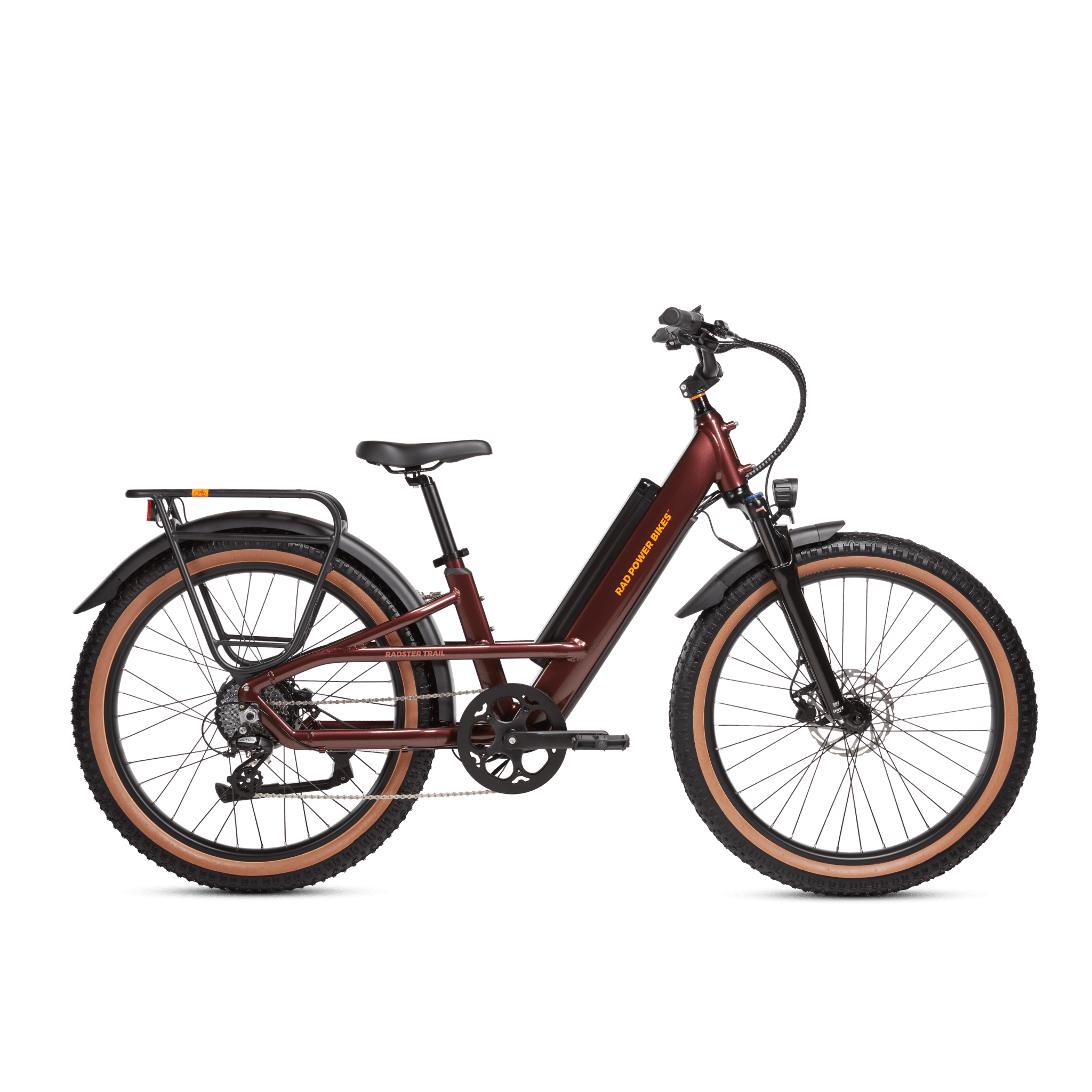
Radster Trail: All-Terrain Daily Rider
The Radster Trail is Rad’s modern take on a fat-tire trail bike. It’s still a bicycle, but with a strong 750W hub motor and torque sensor that gives you a more “natural” push based on how hard you’re pedaling.
What it feels like to ride:
- On city streets, it feels like a sturdy hybrid bike with extra punch. You roll over potholes and curbs without flinching.
- On gravel or light singletrack, the 27.5" x 3.0" tires and front suspension keep things stable without feeling like a sluggish moped.
- The Class 3 top speed (up to 28 mph) means you can keep up with faster traffic on open roads where it’s legal.
- This is the Rad to consider if you’re commuting a few miles each way, but you also want to hit dirt paths or rough greenways on weekends.
RadWagon 5: Family and Cargo Hauler
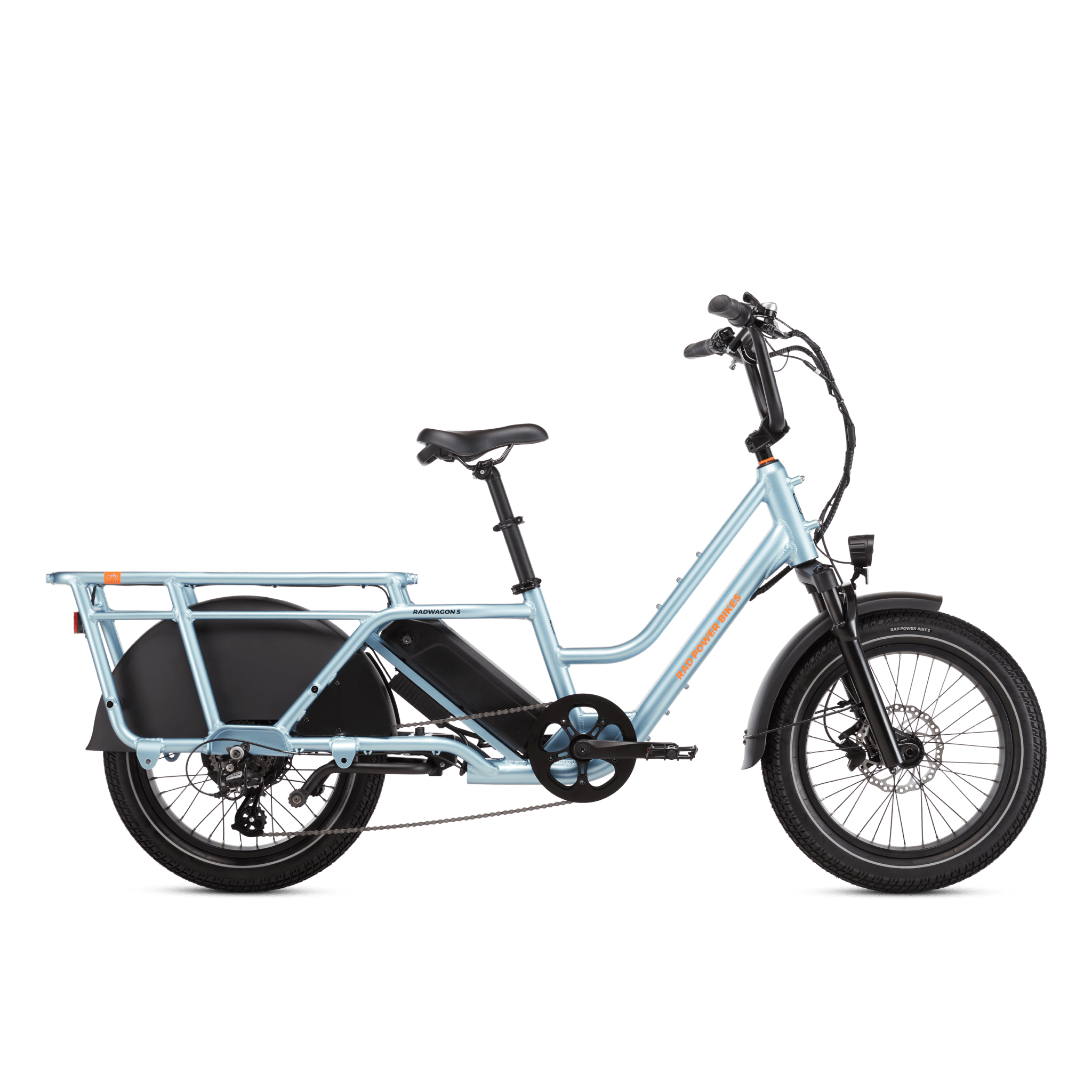
The RadWagon 5 is the longtail cargo e-bike that many people buy instead of a second car. The frame is long, low, and very stable. It’s designed to carry kids’ seats, panniers, or a big rear deck load.
On the road:
- With the 750W motor and 90 Nm torque, it pulls away smoothly even when you have two kids and a week’s groceries on the back.
- The Safe Shield battery and integrated lighting (with turn signals) help with safety when you’re mixed into city traffic.
- Front suspension and a lower center of gravity make it feel surprisingly manageable once you’re moving, even though the bike itself is heavy (around 86 lb).
If you picture school drop-offs, Costco runs, and weekend park trips all on two wheels, this is the Rad Power Bike most people look at first.
RadExpand 5 Plus: Folding for Tight Spaces
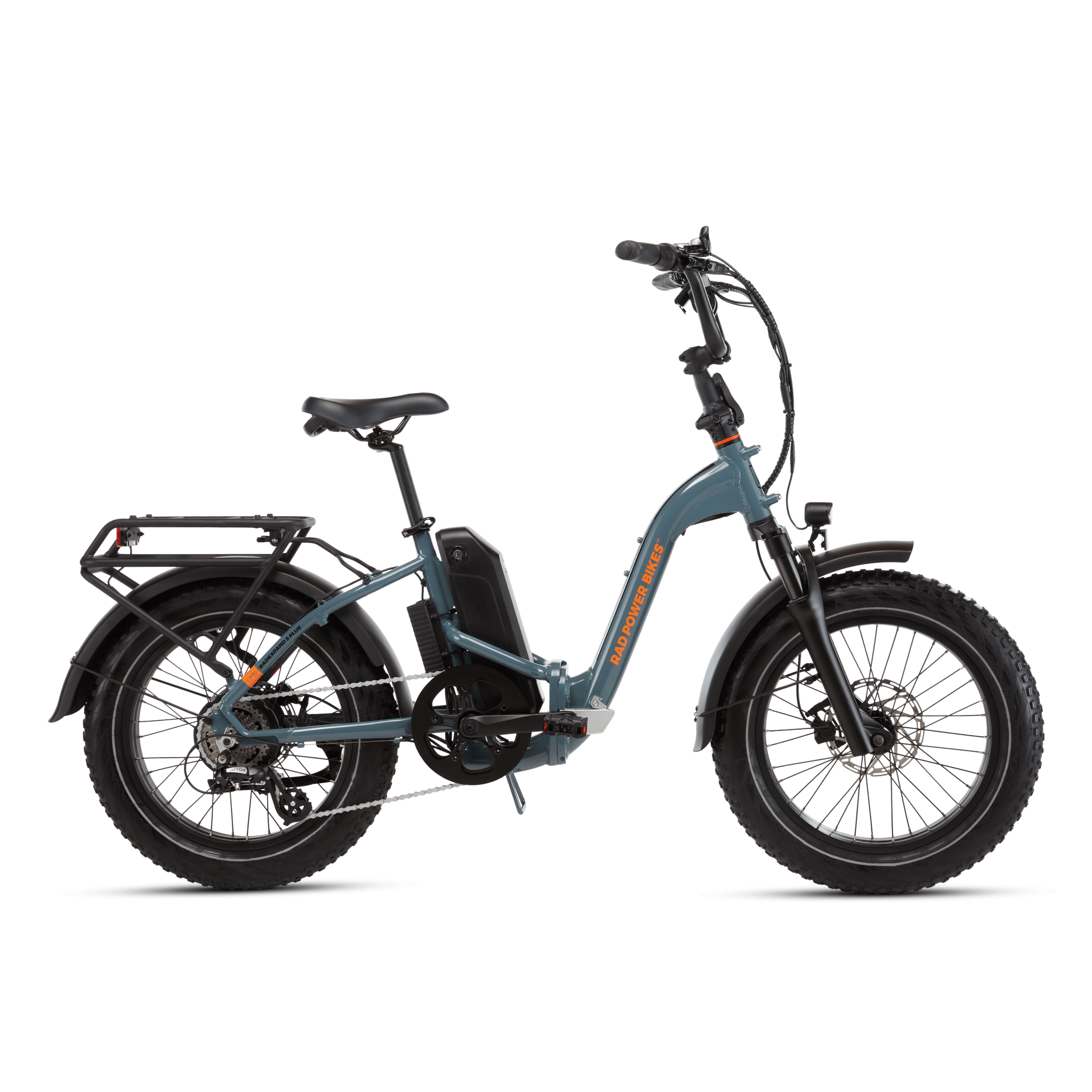
The RadExpand 5 Plus is aimed at riders who want a full-size feeling ebike but need to store it in a small garage, RV, or apartment hallway. It folds to roughly 29" x 25" x 41" and still keeps fat 20" x 4.0" tires for stability.
On the road:
- It tops out at 20 mph, which is plenty for most urban routes and keeps it squarely in Class 2 territory.
- The new torque sensor, hydraulic disc brakes, and front suspension are big upgrades over older folding models, making it feel less “budget” and more like a shrunken version of Rad’s full-size bikes.
- The lower standover and shorter wheelbase help smaller riders feel in control.
If you’ve been hunting for a folding e-bike that doesn’t feel sketchy at speed, this one is worth a serious look.
How These Rad Bikes Feel in Everyday Riding
Specs are nice, but most shoppers really want to know: What is it like to live with these bikes day-to-day?
Hills and Speed
All three of these Rad models share a 750W rear hub motor, but the tuning is different:
Radster Trail: The strongest hill-climber of the three, thanks to its 100 Nm torque and Class 3 tuning. It’s built to get you up long grades without cooking the motor.
RadWagon 5: Also 750W, but optimized for pulling weight — kids, cargo, or both. It won’t sprint like a sport bike, but it keeps rolling when loaded.
RadExpand 5 Plus: Same wattage, lower top speed. It feels more relaxed but still plenty strong on city hills for most riders.
If this will be your first ebike, all three will feel much faster than a normal bike on hills, even in lower assist levels.
Comfort and Handling
The Radster Trail rides like a slightly sporty hybrid. The narrower 3" tires roll easier than true 4" fat tires, but still soak up rough pavement.
The RadWagon 5 feels long at first, but that length is what keeps it stable with kids on the back. Once you get used to swinging a wide tail, most people find it surprisingly confidence-inspiring.
The RadExpand 5 Plus has the most upright, compact feel. Smaller wheels and folding points add a bit of flex, but the fat tires and suspension fork smooth that out.
All three are on the heavier side compared with non-assisted bicycles. You notice that when pushing them up stairs or riding with the power off. But once the motor is on, the extra weight mostly just translates into planted, secure handling.
Battery Life and Range
Rad’s newer models use the Safe Shield battery system, with thermal-resistant potting around each cell and UL 2271 certification.
In practice:
- Many riders see real-world ranges in the 25–60 mile window depending on assist level, payload, and terrain.
- The Radster Trail is capable of the longest rides in light assist modes; the RadWagon 5 will drain faster if you’re hauling maximum cargo.
- The RadExpand 5 Plus, with its 60+ mile claim and 315 lb payload rating, is solid for all-day tourist riding if you’re willing to pedal a bit.
If you’re planning true 100-mile days on throttle-heavy riding, you’ll probably want something with larger or dual battery options (we’ll get there in the Qiolor section).
Price, Warranty, and Long-Term Ownership
Rad’s value pitch is “big-brand support without luxury-bike prices.”
Approximate current pricing (MSRP before sales):
- Radster Trail – around $1,799–$1,999 depending on promos.
- RadWagon 5 – generally in the $2,199–$2,399 range.
- RadExpand 5 Plus – around $1,399–$1,899, with frequent discounts during sales events.
That puts Rad squarely in the mid-market: more expensive than many no-name Amazon e-bikes, but cheaper than high-end mid-drive systems from big traditional bicycle brands.
Ownership details that matter:
- 2-year warranty on the bike and battery.
- UL-certified bikes and batteries across the line, which is now required in cities like New York.
- A large service network and many independent shops familiar with Rad’s parts.
To be fair, Rad has also had recalls and lawsuits in the past (for example, RadWagon 4 tire issues and some safety-related legal cases), which pushed the brand to tighten safety and move toward UL certification and the Safe Shield system.
If you want a brand that’s big enough to have spare parts, documented fixes, and lots of owner experiences online, Rad Power fits that bill. If you prefer a small, boutique builder with hand-built frames, this isn’t that.
Considering Alternatives: Qiolor Tiger RE and Tiger Plus
If you like the Radster Trail’s power and all-terrain ability but prefer a more moto-inspired look and extra-long range, it makes sense to look at Qiolor’s Tiger RE and Tiger Plus as alternatives.
Qiolor Tiger RE
The Qiolor Tiger RE is a compact, cafe-racer–style electric bike aimed mainly at solo riders who want strong performance without giving up agility. It uses a 750W rear hub motor that peaks around 1100W with roughly 85 Nm of torque, so hill climbs and fast takeoffs feel confident rather than sluggish.
Paired with a 48V system and battery options up to 35Ah, the Tiger RE is rated for roughly 60 miles on the standard pack and up to about 130 miles on the big pack in ideal conditions, which is significantly longer than what most single-battery city ebikes offer.
The frame sits low and relaxed, with fat tires and rear suspension to smooth out rough pavement and light off-road paths. That makes the Tiger RE appealing if you like the idea of a small, nimble electric bicycle that rides more like a mini-moto than a traditional pedal bike, but you still want real pedals and usable range for daily commuting.

TIGER RE
$1,499.00 $1,799.00
Vintage moped-style fat tire e-bike with rear suspension and big battery options for long, comfy rides.
Qiolor Tiger Plus
The Qiolor Tiger Plus takes the same core motor and battery concept and stretches it into a more comfortable, two seater ebike. You still get the 750W hub motor (peaking around 1100W) and up to a 35Ah battery with claimed ranges up to about 130 miles, but the frame is longer with a true two-rider seat, passenger pegs, and full suspension. Four-piston hydraulic brakes add extra stopping power, which is helpful when you’re riding two-up or carrying heavier loads.
Compared with a utility-focused cargo e-bike, the Tiger Plus targets riders who want a moped-style e bike for weekend cruising, longer mixed-surface rides, or commuting with a passenger. It trades the classic bicycle silhouette for a retro moto look, while still keeping the legal advantages and flexibility of an e-bike.
If you like the idea of replacing short car trips with something that feels more like a small electric motorcycle but remains pedal-assist–legal, the Tiger Plus is an interesting option to consider alongside Rad’s more traditional designs.

TIGER PLUS
$1,899.00 $2,199.00
A moped-style electric off road bike with a 750W motor and optional 48V 35Ah battery, delivering long-range performance and smooth rides for both urban cruising and off-road exploration.
Verdict – Is Rad Power a Good Electric Bike Brand?
Overall, Rad Power is a good fit for riders who want a practical, serviceable electric bicycle with strong brand backing, not a high-strung performance machine. The Radster Trail, RadWagon 5, and RadExpand 5 Plus cover a wide range of real-world needs: mixed-surface commuting, family cargo hauling, and space-saving folding. They’re not the lightest or flashiest bikes, and you can absolutely find more aggressive motors or longer-range dual-battery setups elsewhere.
But if you value a big owner community, UL-certified batteries, a 2-year warranty, and a straightforward riding experience, a Rad Power ebike is still one of the safer, more balanced choices in the mid-priced market. If, after looking at how you ride, you realize you lean more toward moto-style looks, ultra-long range, or two-up riding, that’s when bikes like Qiolor’s Tiger RE and Tiger Plus deserve a spot on your shortlist alongside Rad.
FAQs
Is Rad Power a good electric bike brand?
Yes. Rad Power is known for practical, mid-priced e-bikes with 750W hub motors, UL-certified batteries, and a 2-year warranty.
How far can a Rad Power ebike go on one charge?
Most riders see about 25–60 miles per charge, depending on terrain, rider weight, and assist level.
Can the RadWagon 5 replace a second car for families?
For many families, yes—it can carry kids and groceries and handle daily errands within a few miles of home.
How are Qiolor Tiger RE and Tiger Plus different from Rad bikes?
Qiolor’s Tiger RE and Tiger Plus are cafe-racer, moped-style e-bikes with long-range battery options and a more moto-like riding position.
Can Rad Power bikes handle hills and heavier riders?
They do well on most city hills thanks to the 750W motor and solid payload ratings, as long as you use the right gear and assist level.


